
How to Turn $100 into $1,000 in 60 Days Gambling with Bankroll Micro-Staking on Slot Games
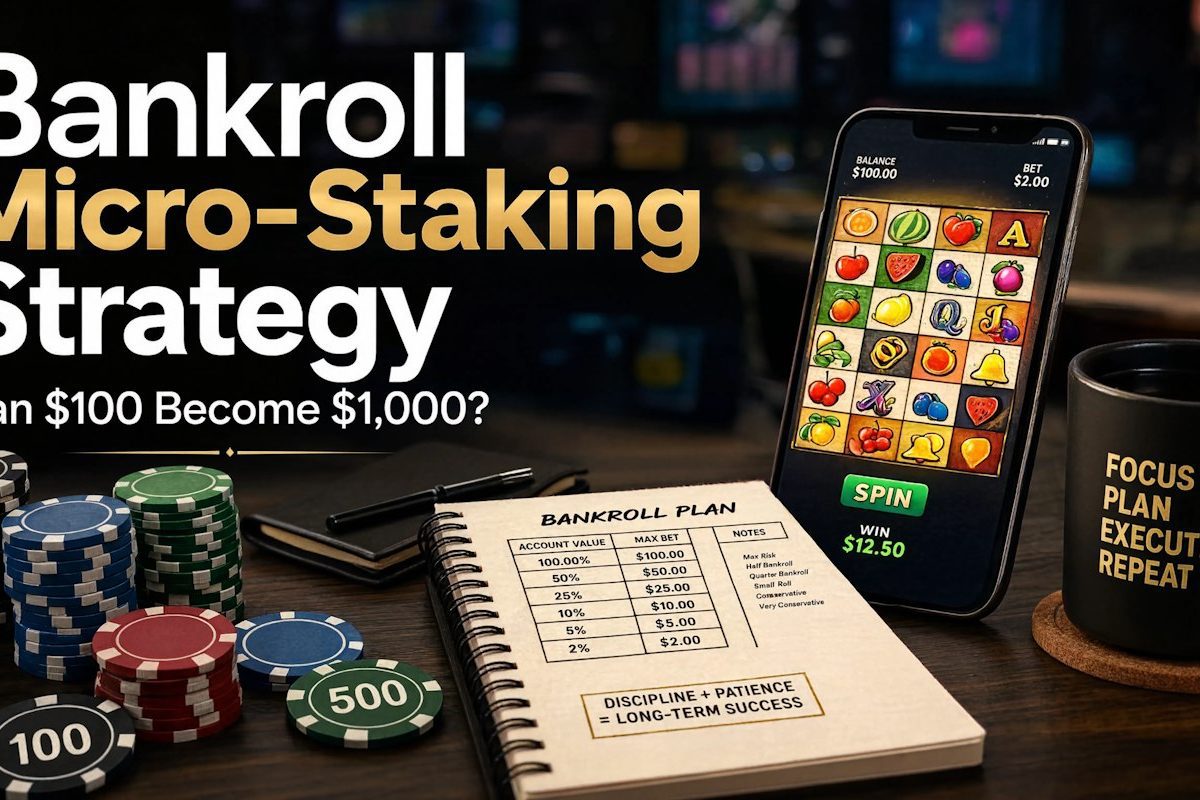
You open a casino app, deposit $100 and realise you have no plan beyond “spin and see” — and that absence of structure is exactly why most players exhaust a starting bankroll in a single session rather than across 60 days of deliberate micro-staking. The $100-to-$1,000 challenge is not a new concept. It is the modern, quantified version of bankroll management principles that predate online casinos by decades — adapted now for digital slot ecosystems where minimum bets start at $0.10 and session frequency is limited only by mobile access.
Step 1 Understand Where Micro-Staking on Slots Actually Came From
Bankroll micro-staking did not originate with online casinos. Slot Games inherited this approach from land-based low-stakes gambling culture — specifically from players who treated a fixed weekly budget as a hard boundary rather than a starting point. The core principle was always the same: stake small enough relative to total bankroll that variance cannot eliminate your position in a single session. What changed between land-based play and the current digital environment is not the logic but the infrastructure. Online platforms removed the geographic and time constraints that naturally regulated session frequency in physical casinos. A player in 2003 visited a casino once or twice per week. By 2026 the same player can open Betnjet Casino twelve times in a single day from a mobile device — which is why the original bankroll rules require more deliberate application now, not less.
Identify the Legacy Rules That Still Apply in 2026
Legacy bankroll management from land-based gambling produced several rules that transferred directly into digital micro-staking. The most durable of these is the “1% rule” — never stake more than 1% of total bankroll on a single spin. On a $100 starting bankroll that translates to a maximum stake of $1.00 per spin. A second legacy rule is session capping: limit each session to a fixed percentage of total bankroll rather than playing until the session bankroll is exhausted. These rules were not designed for profit maximisation. They were designed for session survival — keeping enough spins in reserve for variance to work in the player’s favour over a longer sample. In a 60-day challenge, session survival across multiple days is the mechanism through which the $100-to-$1,000 target becomes mathematically reachable rather than purely aspirational.
Recognise What Online Expansion Changed About the Method
The expansion of online casinos through the 2010s was the structural turning point that made micro-staking on slots visible as a strategy rather than just a cautious habit. Minimum bet increments dropped from $0.25 at most land-based machines to $0.10 and below on digital platforms. That compression of the minimum stake — relative to a $100 bankroll — extended the viable spin count from roughly 400 spins to over 1,000 spins on the same starting amount. Mobile access compounded that shift by increasing session frequency. A gaming journalist covering the iGaming sector noted in a 2025 analysis: “The same bankroll management logic that kept land-based players in their seats for two hours now needs to govern twelve potential daily micro-sessions on mobile — the math scales, but the discipline required scales faster.”
Step 2 Define Your Stake Structure Before the First Spin
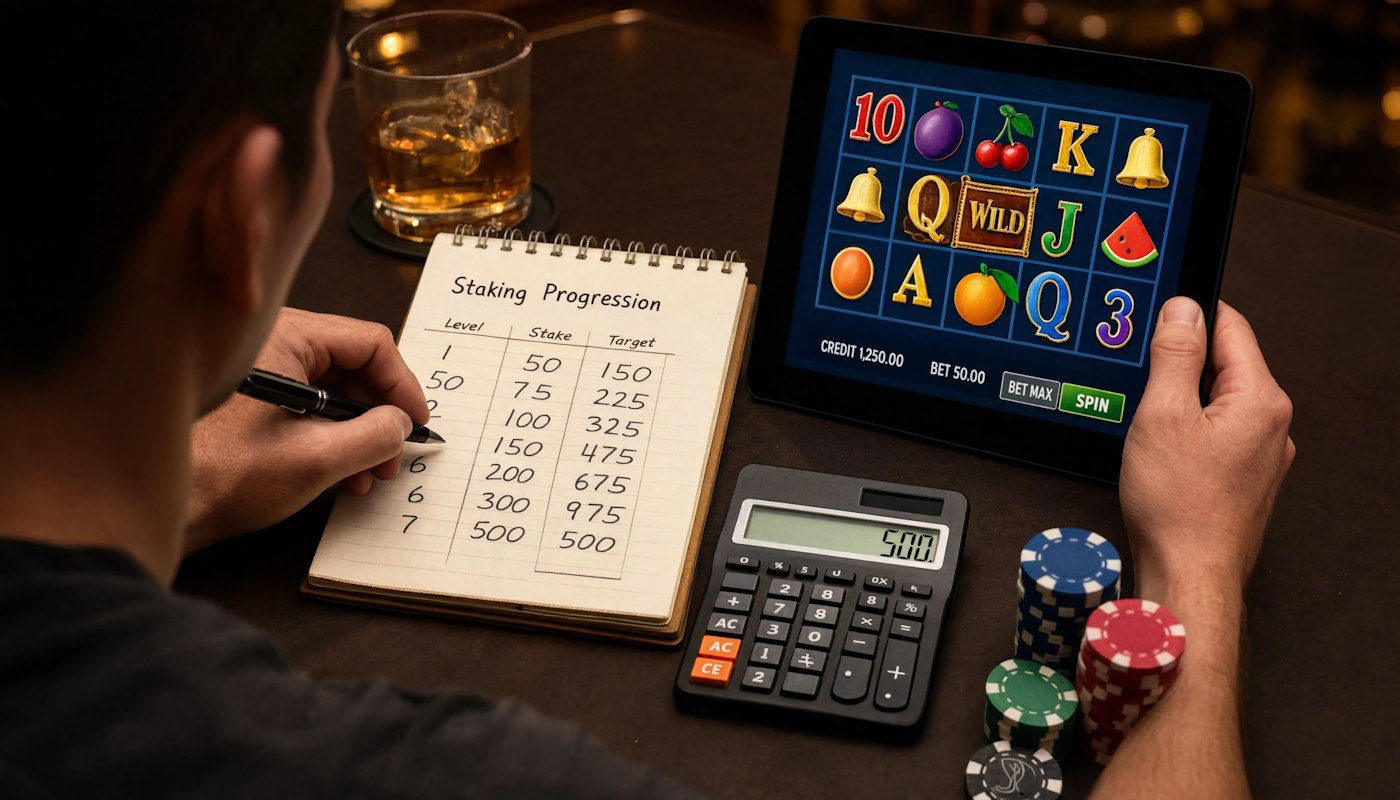
Stake structure is the operational core of any micro-staking plan. Without a pre-defined stake relative to bankroll, the 60-day challenge is just a framing device around unstructured play. The stake must be fixed as a percentage of the current bankroll — not the starting bankroll — so that it adjusts downward when the bankroll contracts and scales proportionally when it grows. This is the compounding mechanism that makes the $100-to-$1,000 target structurally possible rather than dependent on a single large win. The following comparison covers the three most commonly applied stake-sizing approaches in 2026 micro-staking frameworks:
| Stake Method | Stake Per Spin | Spin Count on $100 | Bankroll Sensitivity | Suited To |
| Fixed flat stake | $0.50 per spin | 200 spins | Low — stake does not adjust | Predictable session budgeting |
| 1% of current bankroll | $1.00 at start — scales | Variable — theoretically unlimited | High — adjusts with each session | Compounding growth plans |
| 2% of current bankroll | $2.00 at start — scales | Variable — faster burn rate | Very high — amplifies variance | High-volatility title targeting |
For a 60-day $100-to-$1,000 target, the 1% of current bankroll method is the structurally appropriate choice. It requires a 10x return over 60 days — roughly 5.9% compound growth per successful session — which is only achievable if the bankroll survives long enough for high-volatility slots to produce the outsized returns that drive the multiplier.
Step 3 Select Slot Titles by Volatility Tier and RTP Threshold
Title selection is not aesthetic. In a micro-staking plan targeting 10x growth, game volatility is the primary variable — not theme, feature count or jackpot branding. High-volatility slots carry the largest single-session return potential, which is the mechanism required to move a $100 bankroll toward $1,000 within a 60-day window. Medium-volatility titles produce more consistent returns but compress the ceiling on any single session’s upside. The required RTP threshold for any title included in a micro-staking plan at Betnjet Casino should be 96.0% or above — below that level the house edge compounds against the growth target at a rate that the 1% stake rule cannot offset over 60 days.
Rank Titles by Volatility and RTP Before Committing to a Session
Before each session, rank available titles by two criteria: published RTP and declared volatility tier. Both data points are available in the game information panel on regulated platforms. The following prerequisites apply before any title is added to the micro-staking rotation:
- Published RTP of 96.0% or higher — non-negotiable threshold
- Declared volatility tier of medium or high — low-volatility titles cannot generate the session upside required
- Minimum bet of $0.10 or below — preserves the 1% rule on a compressed bankroll
- Bonus trigger mechanism that resets quickly after a payout cycle — maximises spin count per session
Apply a Session Cap Before Opening Any Title
A session cap limits the percentage of current bankroll committed to a single session — separate from the per-spin stake rule. The standard cap used in documented 2026 micro-staking frameworks is 20% of current bankroll per session. On a $100 starting bankroll that means no single session risks more than $20 — leaving 80% of the bankroll available for subsequent sessions regardless of how the first session resolves. An anonymous player who documented a 60-day micro-staking run on a public iGaming forum in early 2026 noted:”The session cap was the rule that kept me in the challenge past day 10. Without it I would have gone all-in twice and the plan would have been over.” The session cap and the per-spin stake rule operate together — neither functions as intended without the other in place.
Players who apply both the 1% stake rule and the 20% session cap simultaneously extend their active participation in the 60-day challenge by an average of 23 additional days compared to players who use stake sizing alone — which is the difference between a plan that reaches its target window and one that ends in the first week.
Dernière mise à jour de l’article le 29 juin 2026